Keynote Speakers of ICBIP 2026
We are honored to host these distinguished keynote speakers who will share their insights and expertise at ICBIP 2026.
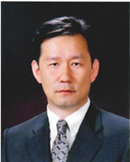
Prof. Tae-Seong Kim
Kyung Hee University, Republic of Korea
Tae-Seong Kim is a distinguished Professor in the Department of Biomedical Engineering at Kyung Hee University in the Republic of Korea. He earned his B.S. degree in Biomedical Engineering from the University of Southern California (USC) in 1991. He went on to receive M.S. degrees in both Biomedical and Electrical Engineering from USC in 1993 and 1998, respectively, and completed his Ph.D. in Biomedical Engineering at USC in 1999. Dr. Kim conducted his postdoctoral research in Cognitive Sciences at the University of California, Irvine in 2000. Subsequently, he joined the Alfred E. Mann Institute for Biomedical Engineering and the Department of Biomedical Engineering at USC as a Research Scientist and Research Assistant Professor. In 2004, Dr. Kim moved to Kyung Hee University, where he currently serves as a Professor. His research interests encompass biomedical imaging, bioelectromagnetism, neural engineering, and assistive lifecare technologies. He has been pioneering new methodologies in signal and image processing, machine learning, pattern classification, and artificial intelligence. Recently, Dr. Kim has initiated novel projects focused on the development of smart robotics and machine vision utilizing deep learning techniques. Dr. Kim is a prolific author, having published over 380 papers and twelve international book chapters. He holds ten international and domestic patents and has received numerous best paper awards.
Abstract: Biomedical engineering thrives at the cross-section of multiple disciplines, where artificial intelligence is rapidly redefining how we analyze, interpret, and interact with biomedical signals and images. This keynote explores how next-generation AI is driving a profound shift across three interconnected domains: Biomedical Computer-Aided Diagnosis (CAD), Human Motion Recognition, and Biomedical Robotics. We will first examine how integrating Reinforcement Learning (RL) into current diagnostic AI models is elevating Biomedical CAD beyond traditional limitations. Next, we will explore how combining advanced AI models for human motion understanding with RL-based imitation learning is paving the way for next-generation humanoid robotics in medical and personal care. Ultimately, this presentation highlights how the convergence of these fields is reshaping ongoing research—moving us from passive diagnostic tools to active, embodied AI systems for future healthcare.

Prof. Jun Zhao
Shanghai Jiaotong University, China
Prof. Jun Zhao received his Ph.D. in Biomedical Engineering from Shanghai Jiao Tong University in 2006. He has been with Shanghai Jiao Tong University since 1991 and currently serves as tenured Professor. From 2006 to 2007, he was a Visiting Scholar at the University of Iowa, USA. Prof. Zhao's research interests include medical imaging and medical image processing. He pioneered the development of the three-source exact helical CT model and algorithm, the three-source exact saddle-curve CT model and algorithm, and introduced the virtual eversion visualization method. He served as the Chair of the Fully Three-Dimensional Image Reconstruction in Radiology and Nuclear Medicine. He served as a member of the Teaching Steering Committee for Biomedical Engineering under the Ministry of Education of China, and holds editorial positions with "Computer Methods in Biomechanics and Biomedical Engineering: Imaging & Visualization" and the "Chinese Journal of Medical Instrumentation". He has led numerous national research projects, published more than 200 papers, and held over 30 Chinese invention patents and 2 U.S. patents.
Speech Title: "A Journey of Image Reconstruction and Analysis: from Ancient Times to the Present and into the Future"
Abstract: This keynote, grounded in the speaker's own career experience and his team's research endeavors, presents personal insights into the trajectory and emerging trends of image reconstruction and analysis. Emphasis is placed on the development and future outlook of key CT technologies—motivated by the demands of patients, healthcare institutions, and clinical use cases—alongside the synergistic progress in computer and AI. Several illustrative examples are included.