Invited Speakers of ICBIP 2026
We are pleased to welcome these distinguished researchers who will present their latest work at ICBIP 2026.
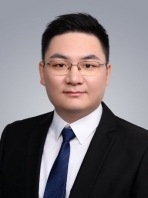
Prof. Naifu Jiang
Shenzhen Institutes of Advanced Technology, Chinese Academy of Sciences
Naifu Jiang is a Professor at the Shenzhen Institutes of Advanced Technology, Chinese Academy of Sciences. His main research interests lie in brain-computer interface for pain and intelligent rehabilitation engineering. He is recognized as an Innovative Figure of Guangdong Province's Doctoral and Postdoctoral Programs, a core member of Shenzhen's High-Level Overseas Talent Team, and a Shenzhen High-Level Overseas Talent. He holds multiple positions in domestic and international academic organizations, including Council Member of the International Association for Computational Intelligence, Committee Member of the Biomedical Sensing Technology Branch/ Youth Vice Chair of the Rehabilitation Engineering Branch of the Chinese Society of Biomedical Engineering. Over the past five years, he has published over 50 high-level papers in journals such as IEEE TNSRE/TBME, Advanced Materials, JNER, and Spine. He has applied for or been granted over 10 national invention patents and 3 PCT international patents. He has served as Principal Investigator for projects funded by the National Natural Science Foundation of China and for sub-projects of the National Key R&D Program.
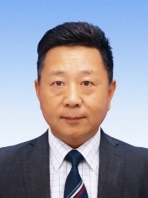
Prof. Takashi Kuremoto
Nippon Institute of Technology, Japan
Takashi Kuremoto received the B.E. degree in System Engineering from the University of Shanghai for Science and Technology, China, in 1986, and the M.E. and Ph.D. degrees from Yamaguchi University, Japan, in 1996 and 2014, respectively. From 1986 to 1992, he worked as a system engineer at the Research Institute of Automatic Machine, Beijing. In 2008, he was an Academic Visitor at the School of Computer Science, The University of Manchester, U.K. He was affiliated with Yamaguchi University from 1993 to 2021, and since 2021 he has been a Professor at the Nippon Institue of Technology, Japan. His research interests include artificial neural networks, bioinformatics, machine learning, complex systems, time series forecasting, and swarm intelligence. He has authored more than 300 publications and is a member of IEICE, IEEE, IIF, and SICE.
Talk: "Deep Learning–Based MRI Biomarkers for Early and Prodromal Parkinson’s Disease"
Abstract: Parkinson’s disease (PD) is a progressive neurodegenerative disorder characterized by the gradual loss of dopaminergic neurons in the substantia nigra. While motor symptoms such as tremor, bradykinesia, and rigidity typically appear in the later stages, non‑motor symptoms—including olfactory dysfunction, constipation, REM sleep behavior disorder, anxiety, and depression—may emerge years earlier during the prodromal phase. Identifying this early stage is essential for enabling timely intervention and slowing disease progression. Recent advances in MRI have made it possible to detect subtle gray‑matter alterations associated with early PD. At the same time, deep learning has become a powerful tool for extracting clinically meaningful patterns from neuroimaging data. However, medical imaging datasets are often small and heterogeneous, raising concerns about subject‑level data leakage and overestimated model performance. In this invited talk, Dr. Takashi Kuremoto presents a systematic evaluation framework for classifying healthy controls, prodromal PD, and diagnosed PD using gray‑matter MRI. The study compares three representative architectures—MedicalNet3D, ResNet18, and 3D ViT‑B16—under strict subject‑level data management. The results highlight the advantages of medical‑domain pretraining and demonstrate a reliable, leakage‑free approach to model validation. This work contributes to the development of trustworthy AI tools for early PD diagnosis and disease‑stage assessment.
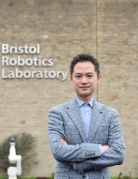
Prof. Wenhao Zhang
University of the West of England, UK
Wenhao Zhang is a Professor at the University of the West of England, Bristol, Co-Director of the Centre for Machine Vision (CMV) at the Bristol Robotics Laboratory, and an Honorary Academic at the University of Bristol. His research focuses on computer vision and machine learning, with a strong emphasis on interdisciplinary context in healthcare and agri-tech. Over the past three years, Wenhao has secured over £5 million in external research and knowledge exchange funding as Principal Investigator / Co-Investigator, awarded by a range of competitive sources including UK Research and Innovation (UKRI), Innovate UK, charities, and industry. This portfolio of funding currently supports ten active projects and underpins a substantial body of research spanning both fundamental methodological development and applied interdisciplinary translation. Examples of his work include eye tracking and machine learning systems for the early detection of dementia, deep learning approaches for renal fibrosis assessment, computer vision methods for the detection of early signs of digital dermatitis and lameness in livestock, and the development of deep affective AI models for the recognition and quantification of animal emotion and welfare states. Wenhao has also played a leading role in translating research into deployed and commercially relevant systems through government-funded programmes, industrial collaboration, and consultancy. This includes the development of technologies such as the award-winning SKAi (for precision weed spot-spraying) and PediVue (for cattle hoof health monitoring), which are now in commercial use across multiple global settings. Wenhao currently serves as Director of Studies for four PhD researchers, including UKRI-funded and industry-partnered doctoral projects, spanning a range of interdisciplinary areas.
Talk: "Towards the Ubiquitous Cognitive Assessment Using Single-Camera Eye Tracking and Machine Learning Analysis"
Abstract: This talk presents a body of work on developing scalable approaches to cognitive assessment using single-camera eye tracking and machine learning, spanning controlled experiments, behavioural modelling, and emerging directions in naturalistic design. One strand of work focuses on inter-individual differences in eye movement behaviour, examining how stable and variable perceptual and oculomotor signatures differ across participants under controlled viewing conditions. This provides a reference point for understanding variability that is not solely driven by task or stimulus structure. A second strand investigates cross-age differences using conventional laboratory-based visual paradigms designed to elicit structured eye movement responses. Machine learning models are used to evaluate how reliably cognitive load and age-related differences can be inferred directly from raw gaze dynamics, without reliance on handcrafted event-level representations. A further extension explores gamified experimental designs in which task demands are embedded within more naturalistic visual environments. This allows the investigation of how changes in task structure and engagement influence the separability of cognitive state signals in eye movement data, while maintaining controlled experimental comparability. Finally, a complementary line of work in animal behaviour analysis using machine learning is briefly considered. While operating in a different domain and modality, it highlights shared methodological challenges in cognitive and affective inference, particularly the problem of weak, noisy, or ambiguous ground truth in complex behavioural systems. This comparison motivates a broader view of cognitive assessment as structured inference under uncertainty across domains.
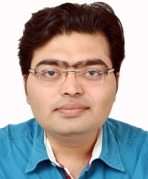
Dr. Rajeev K. Singla
West China Hospital, Sichuan University
Dr. Rajeev K. Singla (also known as Rajeev Kumar; 拉杰夫·K·辛格拉) is an assistant researcher at the Institutes for Systems Genetics, West China Hospital, Sichuan University. He has extensive experience in the fields of natural products, metabolic disorders, neurological diseases, infectious diseases, cheminformatics, and public health. He is one of the founders and Editor-in-Chief of Indo Global Journal of Pharmaceutical Sciences, Associate Editor of Frontiers in Pharmacology, Advisory Board Member of Heliyon (Cell Press), and Editorial Board Member of Cancers (MDPI) and BMC Complementary Medicine and Therapies. He is among the top 2% of scientists according to Stanford University, Scopus, and Elsevier reports (single-year data based on publications in 2022–2025; career-long data based on 2025). He has published more than 150 papers in SCIE-indexed journals, including Phytomedicine, Neuroscience and Biobehavioral Reviews, and Critical Reviews in Food Science and Nutrition. According to Scopus, he has published papers with more than 800 co-authors from 40 countries so far. Rajeev K. Singla makes full use of social media such as Twitter (now X), Facebook, and LinkedIn for scientific communication and has published several papers using the crowdsourcing potential of social media. According to Web of Science, he has more than 450 peer review records and more than 300 verified editing records. This showcases his strong editorial and reviewing skills and experience and significant roles in many journals, including Bioactive Materials, International Journal of Surgery, Pharmacological Research, and Seminars in Cancer Biology. According to Google Scholar, his papers have been cited more than 6500 times, with an H-index of 42 and an i10 index of 161. To date, he has published 5 books and 20 chapters. He previously served as expert reviewer to evaluate SERB-EMR project proposals for DST, Government of India. He serves as an expert reviewer for the Sichuan University Innovation Training Program Academy and participates in co-guiding the College Students Innovation and Entrepreneurship Competition. In addition, he was awarded the 2024 Sichuan Province Foreign High-level Talent Certificate this year and won the second prize for the 2022-2023 Suzhou Natural Science Excellent Academic Paper Award (SZLW2024084). In 2024, he successfully applied for a Sichuan Provincial Science and Technology Department project to find alternative therapies extracted from coconut shells to fight Pseudomonas aeruginosa (Project No.: 2025YFHZ0213). He is also associated with the European Society of Clinical Microbiology and Infectious Diseases (ESCMID) as Local Champion (China), ESCMID Research Grant Evaluator, and ESCMID Global 2026 Abstracts Evaluator.